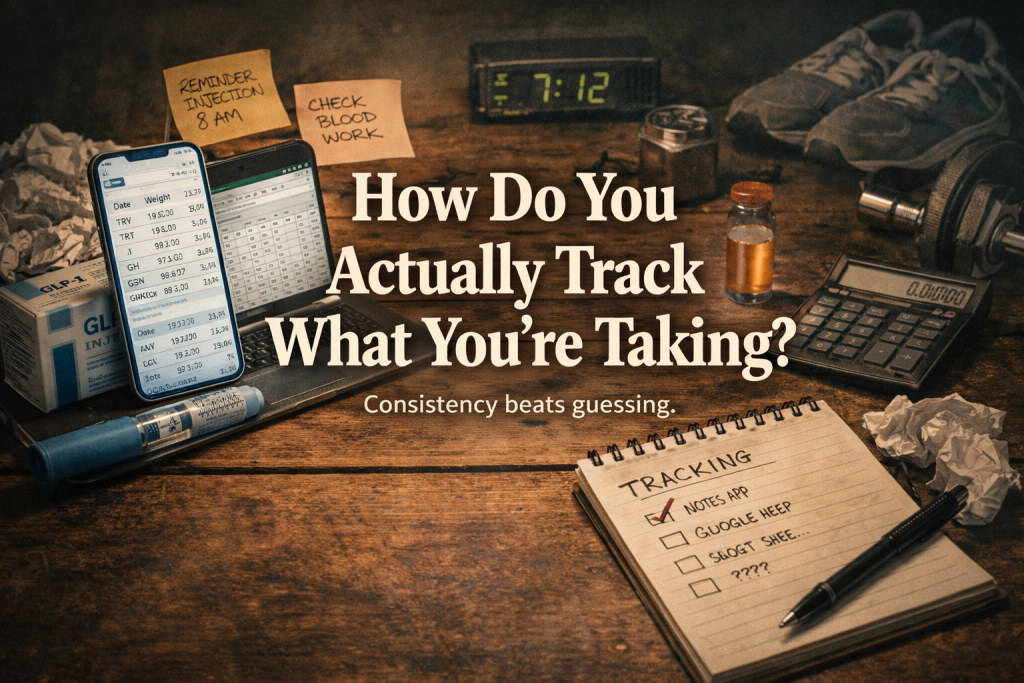
I still use good old fashioned Google Sheets to track everything. Nothing fancy. I log doses, timing, compounds, reactions, and notes. I’ve got spreadsheets going back years, which means I can look at dosage changes, patterns, and how my body actually responded over time instead of relying on memory or how I feel about it today.
In the actual sheet, everything is laid out horizontally by date. Each day is a single row. That makes it easy to scan across and see exactly what I took, then line that up with weight changes, symptoms, recovery, sleep, or mood. It’s simple, but simple scales.
Why Context Matters More Than Tools
Most issues don’t come from choosing the wrong tool. They come from not knowing what you actually did. Doses creep. Timing drifts. Something new gets added, something else quietly disappears, and a few weeks later the results feel confusing or inconsistent.
Tracking creates continuity. It turns isolated days into a story you can actually read. Without that record, every adjustment feels like starting over, even when it isn’t.
You don’t need perfect data. You need enough consistency to see cause and effect over time. That’s what makes experimentation useful instead of frustrating.
Why I Prefer Google Sheets
Sheets is free. That matters more than people admit.
It lives in the cloud, which means it syncs automatically across desktop, laptop, tablet, and phone. I can log something quickly on my phone if I need to, then review or analyze it later on a larger screen when my brain actually wants to think.
It’s flexible. I can add columns for anything I care about. Compounds. Dosages. Timing. Notes. Sleep. Steps. Injuries. Labs. If something becomes relevant later, I don’t need a new app. I just add a column.
It’s boring in the best way. No notifications. No gamification. No pressure to complete anything. Just data sitting there quietly, waiting for you to notice patterns when you’re ready.
How I Structure a Typical Sheet
Each row is a single day.
Columns usually include bodyweight, key compounds, doses, timing notes, and a short comments field. Some days that comments field is empty. Other days it’s the most important column on the page.
Separate tabs handle nutrition, bloodwork, and training. Everything lives in the same file, so over weeks and months you start seeing connections instead of isolated data points.
What matters isn’t the exact layout. What matters is that it stays consistent enough to compare yesterday to last month and last year.
Mobile vs Desktop Reality
Sheets works on mobile, but let’s be honest. It’s better on a computer.
Some people are fine logging everything on their phone. Others hate it. I’m in the second camp. For anything detailed, I log on my laptop. Phones are great for reminders and quick notes. They’re not great for thinking.
The upside is you get to choose. Log quick entries on mobile. Review and clean things up later on desktop. Same data. Same file. No friction.
Other Tracking Options People Actually Use
Not everyone wants spreadsheets, and that’s fine.
Some people use the notes app on their phone. Simple. Always available. Surprisingly effective if you stay consistent.
Others use injection tracking apps that only track compounds and doses. No extras. That works well if your protocol is stable and you just want a record.
Calendars are popular for titration reminders. Especially when someone is only tracking one compound and timing matters more than detail.
There are also protocol and peptide apps in development that combine calculators, tracking, and reminders. Those can be useful if they stay simple and don’t turn into another system you abandon after two weeks.
The Tool Matters Less Than the Habit
The best system is the one you’ll still be using six months from now.
Perfect tracking for two weeks beats sloppy tracking forever. But consistent tracking beats both.
This isn’t about being obsessive. It’s about being honest. Writing things down turns “I think this helped” into “this is what actually happened.”
If you’re experimenting with anything that affects hormones, metabolism, recovery, or body composition, tracking is the difference between learning and hoping.
The spreadsheet doesn’t care how you feel about it. It just tells you the truth when you’re ready to look.
Private Coaching (Optional)
If you have a specific educational question related to this topic, I occasionally answer one per person via email. I cannot provide medical advice, but I am happy to offer general context and perspective. If that would be helpful, you can email me here.