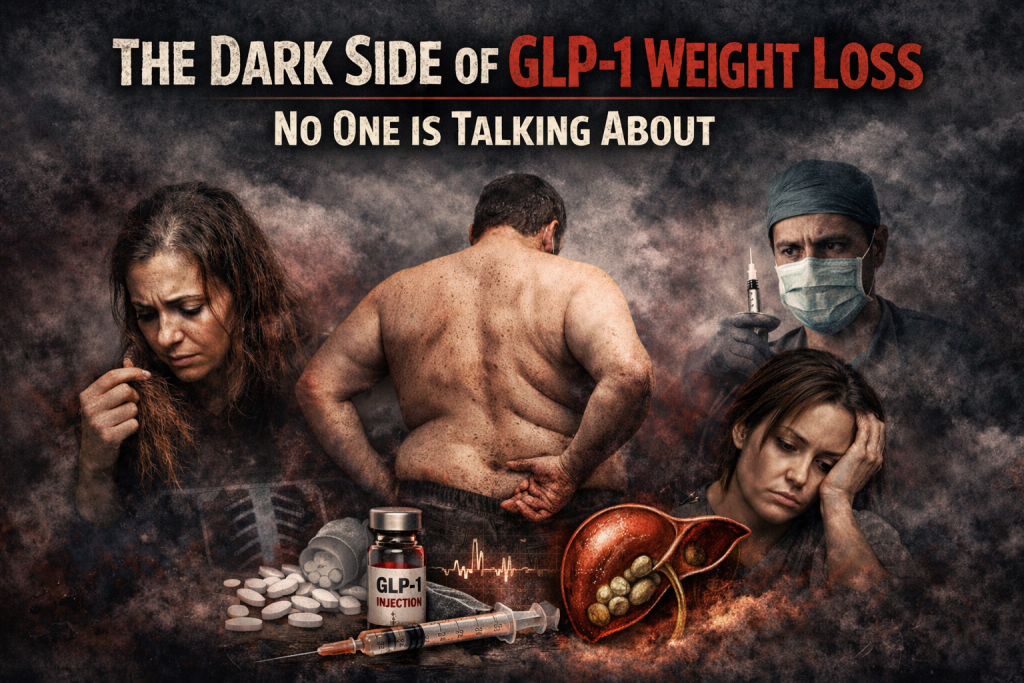
GLP drugs are causing depression. Hair loss. Muscle wasting. Hormone crashes. Gallbladder problems. Chronic fatigue. Brain fog. Electrolyte imbalances. Nutrient depletion. Emotional flatness. And if you read enough headlines, you start to wonder how anyone taking them is still alive.
Every week there is another article or viral post warning that these medications are quietly wrecking people. People losing their hair. People losing muscle. People feeling depressed. People feeling exhausted. The story always sounds the same. A miracle drug turned hidden disaster.
See what I did there.
That is exactly how click bait works. Start with the scariest possible framing and let your brain fill in the rest.
Now let’s talk about what is actually happening most of the time.
GLP medications do two main things. They slow digestion and they reduce appetite. That is the whole mechanism. People eat less without feeling like they are starving.
The side effects people talk about usually start after that.
Someone begins the medication and suddenly they are eating half the food they used to. Sometimes even less. Sounds great for weight loss. Not so great if they accidentally cut their protein, electrolytes, and micronutrients in half at the same time.
Now magnesium drops. Sodium drops. B vitamins fall. Omega 3 intake disappears. Protein intake collapses. Calories crash. Weight starts falling quickly and the body begins adapting to the new environment.
Then the scary symptoms show up.
Hair shedding is a classic one. Rapid weight loss has triggered temporary hair loss for decades. Long before GLP medications existed. It is called telogen effluvium and it happens whenever the body experiences rapid metabolic change.
Fatigue is another common one. When calories are low and electrolytes like sodium and magnesium drop, energy tanks. Blood pressure drops. People feel weak and assume the drug is the problem.
Muscle loss gets blamed on the medication too. But if someone is eating low protein and not lifting weights while losing weight quickly, the body will absolutely burn some muscle. That is basic physiology. Every diet in history has had this issue.
Then there is mood.
Food is one of the most reliable dopamine sources most people have. It is predictable, comforting, and socially reinforced. When a GLP medication suddenly removes that reward loop, some people feel emotionally flat for a while until the brain recalibrates.
Add low calories and low micronutrients on top of that and people start saying the drug caused depression.
Most of the time what really happened is the person unintentionally crash dieted.
The same thing shows up with gallbladder issues. Rapid weight loss of any kind increases gallstone risk. Doctors have seen this for decades in aggressive dieting and bariatric surgery patients.
But because GLP drugs are new and popular, they get blamed for everything that happens afterward.
That does not mean side effects never happen. Every medication has potential risks. But the internet loves a clean villain, and it is much easier to blame a drug than to admit the real issue might be basic nutrition and aggressive calorie restriction.
And here is the ironic part.
When people fix protein intake, add electrolytes, keep micronutrients in check, and avoid crash dieting, most of the scary “GLP side effects” quietly disappear.
Which makes for a pretty terrible headline.
But it happens to be the truth.
Private Coaching (Optional)
If you have a specific educational question related to this topic, I occasionally answer one per person via email. I cannot provide medical advice, but I am happy to offer general context and perspective. If that would be helpful, you can email me here.